


LAMB OF GOD's RANDY BLYTHE Says He Deleted His Social Media
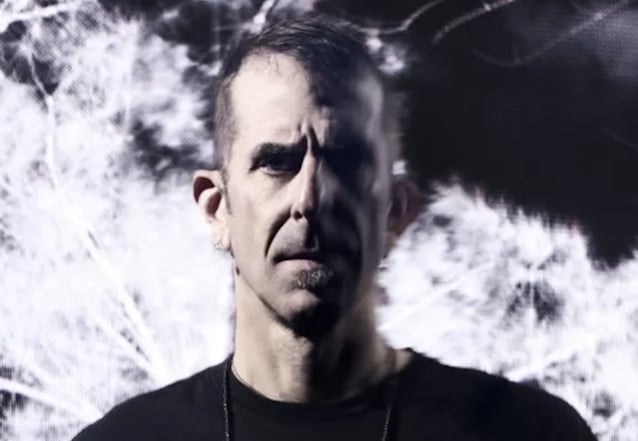
October 15, 2026In a new interview with Australia's The Break Down With Nath & Johnny, LAMB OF GOD frontman Randy Blythe was asked how he feels about the fact that fans are able to leave negative comments about him and his band through social media and other digital platforms. He responded (as transcribed by BLABBERMOUTH.NET): "They can't, 'cause I deleted my social media. [The Internet trolls] don't exist. Bad news for you guys. You don't exist.
"I'm not on social media," Randy clarified. "I have a Substack, but only paid subscribers can comment. And if someone were to step... Cause if you're gonna insult me, you gotta pay me. And then I'm gonna still block you. But you're still paying me. Pay me, motherfucker. This is a business."
Blythe previously offered his perspective on the well-known downside of social media, which is the addiction it creates, in a February 2025 interview with The Midlife Makeover Show hosted by Wendy Valentine. He said at the time: "See, obviously, I am not a Luddite, I am not anti-technology. I'm talking to you from New York City. We can see each other in this magic device called a computer. And now we all carry these little tiny computers around in our pocket that are millions of times more powerful than the ones that guided our first space missions. People went to the moon using computers the size of this hotel room and we have ones that are bazillions of times more powerful. So the technology is good for us being able to talk, and I love talking to my friends overseas. I can FaceTime my friends in Japan or Finland or whatever, and it's amazing and it's great. However, it should be used as a supplement to real human interaction, because there is empathy and nuance, and all that stuff gets lost when you're not face to face and you unconsciously are constantly evaluating someone's body language and seeing how they're carrying themselves. And that will give you real clues as to their emotional state and therefore how you should interface with this person face to face. So, like I said, this technology is great, but it is a digital representation of real life. And I think people have come to rely on it too much. 'Oh, I have lots of friends on Instagram or TikTok or Facebook' or whatever. I'm, like, really? Are those friends gonna come help you when you blow a flat on the side of the road on your car and you don't have a spare and you need them to go to the store to get one? Are they gonna do that for you? Your 800 friends all over the world? No."
Blythe also discussed social media's impact on our mental health during a September 2020 appearance on "The Hardcore Humanism With Dr. Mike" podcast. He said at the time: "This is one thing that worries me for the younger generation, who are raised with these things. The 'pocket Jesus,' as I call it, the cell phone, has everything you need; it's your savior. The world is your oyster.
"For instance, I've traveled the world. I've been to every continent except for Antarctica. I can tell you there is a vast, vast difference from looking at pictures of, let's say, the Highlands in Scotland, or watching a documentary about the Highlands in Scotland — you can learn some things. There's a vast difference between viewing that on a screen and being there. It is unbelievable. That's a plug for the Highlands; it's an amazing place. But it's not comparable.
"So, for me, I'm not a Luddite — I believe the Internet is a valuable tool — but I feel it should be as the tool, a means to an end rather than the end itself. And I feel that's kind of, in a lot of ways, what it's become, with social media and so forth, people chasing likes and building their profiles and all that other stuff. And it's, like, to what end? What does that get you in the end? A bazillion Instagram followers. What does that get you? How does that translate into something of value within your life other than you're popular on cell phones. [Laughs]"
Blythe went on to say that while social media can be a valuable educational and communication tool, it can also be an immense distraction.
"When I lay down on my death bed, and I do hope I'm cognizant when I am dying — I hope I'm awake," he said. "I want to experience this; I want to understand what's happening, and hopefully I will meet it with fortitude and bravery. But when I lay down on my death bed and I think about my life, I doubt I will say to myself, 'You know, I really wish I had spent more time looking at my cell phone, building my social media profile. I really wish I had been on the computer more Googling kangaroos,' or whatever I was doing.
"I like to use these things in order to inject myself into the stream of life," he continued. "I'm lucky enough to travel — or I used to be — with my band a lot, and when we would go into a city, I'd go on Google. [I would look for] museums, or what's an interesting neighborhood here, or what's the local food. And then I put the phone in my pocket and I go. Because I want to taste that food, I want to walk in that museum — I want to see these things. And I think the challenge right now, being stuck at home so much, is there's a lot of things about my town, and I think this is for anyone probably, that they take for granted, that become mundane after you're exposed to them daily. And I'm trying to really broaden my perspective on where I live and go see some things I haven't seen in a while or maybe find some new things — try and view the world in a different way."
LAMB OF GOD's latest album, "Into Oblivion", came out in March via Epic in the U.S. and Century Media in Europe. The LP was produced and mixed by LAMB OF GOD's longtime studio collaborator Josh Wilbur, and was recorded across multiple locations tied closely to the band's identity. Drums were tracked in Richmond, Virginia, with guitars and bass recorded at guitarist Mark Morton's home studio. Blythe recorded his vocals at the legendary Total Access studio in Redondo Beach, California, the birthplace of seminal punk records by BLACK FLAG, HÜSKER DÜ and DESCENDENTS.


 Prev
Prev 